
Équipe
 Cassie Springer Toulouse
Fondatrice
 Jean-Baptiste Toulouse
Fondateur
 George Pischinas
Bénévole
My name is George Pischinas. I’m from Greece and I currently live in Reading (UK). I first learned about SMARCB1 Hope through my sister Vera Pischina when she was diagnosed in December 2021 with SMARCB1-deficient sinonasal carcinoma (SD/SC). I promised her that I would support the inspiring work that SMARCB1 Hope
is doing, whether or not this cancer took her life.
Vera passed away in April 2023, and I joined the team. I am committed to helping accelerate research on SMARCB1-deficient cancers in any way I can so that one day other families do not have to go through what my family has. I have a variety of roles within the organization, including helping with fundraising and growing our digital presence.
Advisory Board
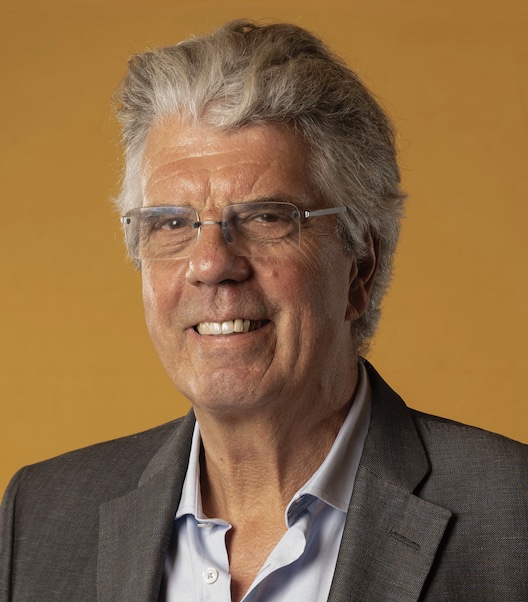 Olivier Delattre
Institut Curie (France)
Olivier Delattre, MD, PhD was trained in pediatric oncology and in genetics. His research area mainly investigates the genetic and biology of pediatric cancers. His laboratory has identified the genetic alterations of a variety of childhood cancers including the EWS-FLI1 rearrangement in Ewing sarcoma, the SMARCB1 inactivation in rhabdoid tumors, the ALK activation mutation in neuroblastoma and the BCOR-CCNB1 fusion in Ewing-like sarcoma. He has also contributed identifying major tumor predisposing mutations or genetic susceptibility factors in neurofibromatosis type II, rhabdoid syndrome predisposition, neuroblastoma and Ewing sarcoma. His lab has also strong interest in deciphering the cellular origin of pediatric cancers and particularly Ewing sarcoma, neuroblastoma and rhabdoid tumors and in finding new therapeutic targets in these diseases. Olivier Delattre is a member of EMBO since 2011 and of Academia Europea since 2012.
Olivier Delattre is Director of the Cancer, Heterogeneity, Instability and Plasticity department Inserm U830 and Director of the SIREDO center, a pediatric center that gathers researchers and physicians in the oncopaediatrics, adolescent and young adult fields to bring new medications to patients as quickly as possible.
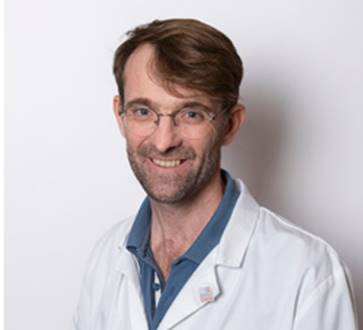 Franck Bourdeaut
Institut Curie (France)
Franck Bourdeaut is a pediatric oncologist currently working at Institut Curie with two main fields of clinical practice: pediatric neuro-oncology and genetic predisposition to childhood cancer.
In neuro-oncology, Franck Bourdeaut is more particularly involved in pediatric embryonic brain tumors, and presently coordinate the French working sub-group for these entities. He is also the current chair of the European ATRT working group within SIOPe. He has been the French principal investigator of two international Phase I-II trials recruiting patients with SMARCB1-deficient cancers and will be the French principal Investigator of the next European prospective protocol for children with newly diagnosed ATRT. His is also a member of SIOPe Medulloblastoma working group, particularly in charge for France of the development of molecular diagnosis and genetic assesments.
In the field of genetic predisposition, he has co-funded and chaired the French Committee of Oncogenetics for 10 years and is now an elected member of the steering committee of the European group working on predisposition to childhood cancers (SIOPe Host Genome Working Group). He is also a co-funder and member of the pilot committee of the national observatoire for cancer pediatric predispositions syndromes (PREDCAP).
Franck Bourdeaut is also heading a research team dedicated to Smarcb1-deficiency in cancer, and mainly focusing on rhabdoid tumors, within the Translational Research In Pediatric Oncology Lab (INSERM U830 directed by Dr Olivier Delattre). His main interests include i) the development of various mouse models of Smarcb1-deficiency, to elucidate early oncological events and to give access to relevant preclinical tools, and ii) combination of innovative therapies, focusing in particular on immunotherapy and epidrugs.
He has been a recipient of the “Interface INSERM pour hospitaliers” grant, and the SIOP/Arceci innovation Award in 2016.
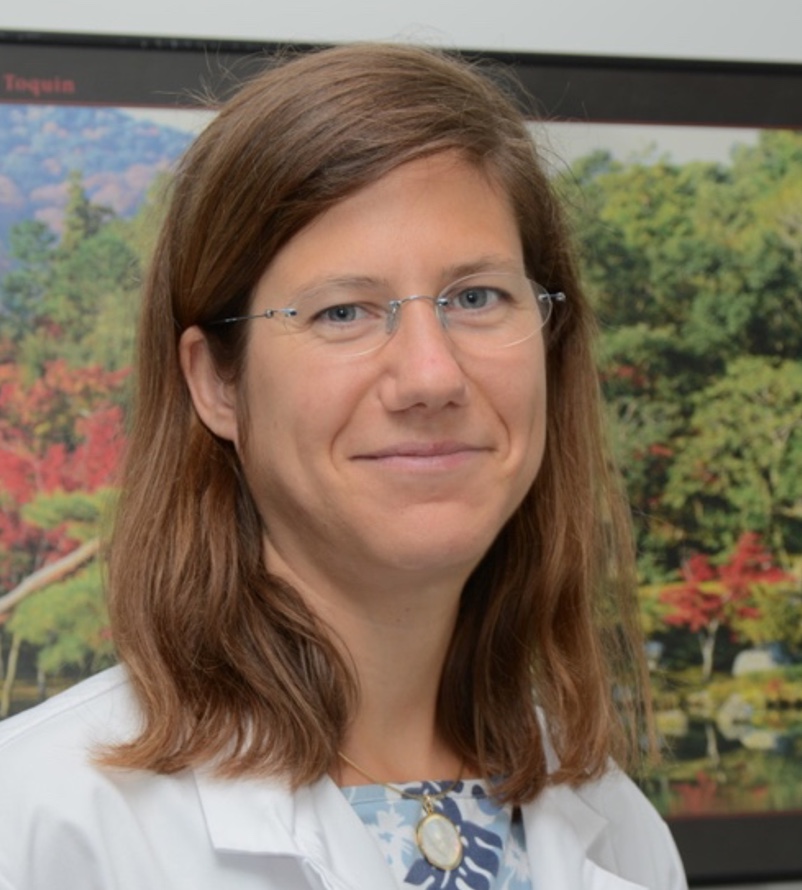 Sophie Postel-Vinay
Gustave Roussy (France)
Sophie Postel-Vinay (MD, Ph.D), is Physician Scientist at the Drug Development Department (where she is Senior Medical Oncologist) and U981 INSERM research unit (Group Leader) at Gustave Roussy.
She received her medical degree from the Université Paris XI in 2010, and joined the faculty in November 2013 after completion of her PhD performed at the Institute of Cancer Research (London), which focused on DNA repair and synthetic lethality. Specialized in Drug Development and early phase clinical trials, she completed her medical oncology residency training in Paris, and spent 18 months at the Royal Marsden Hospital of London at the Drug Development Unit. Dr Postel-Vinay is member of ESMO, AACR and ASCO. She was the head of the Phase 1 committee between 2020 and 2022, and is particularly interested in novel clinical trial designs and dose-definition in phase 1 trials.
Thanks to her Physician Scientist position, Dr Postel-Vinay also has a fundamental and translational research activity within the INSERM Unit 981. She obtained in 2018 the ATIP- Avenir “Young Group Leader” grant from INSERM, reinforced by an ERC StG in 2022, which allowed her to develop her own independent group. In 2019, she was granted the “Prix Irène Joliot-Curie” from the French Academy of Sciences for her scientific research work, and the “Prix Gallet et Breton” from the French Medicine Academy for her clinical research. Her current research activity focuses on chromatin remodeling and its interplay with DNA repair and immune modulation in solid tumors. Her research interests include DNA repair, chromatin remodeling, synthetic lethality, sarcoma, predictive biomarkers and drug development. As a clinician scientist, she endeavors to translate her laboratory results into clinical protocols, and has accordingly developed several early phase academic studies based on her research.
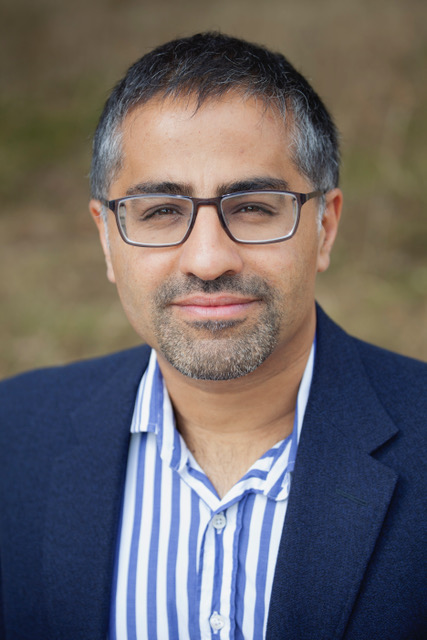 Sam Behjati
University of Cambridge (UK)
Sam is the Chair / Professor of Paediatrics in Cambridge and the Director of the (yet to be built) Cambridge Children’s Research Institute. Of Iranian ancestry, Sam was born and brought up in Germany where he went to school and completed National Service. He then moved to England to read medicine at Oxford, followed by specialist training in paediatrics and paediatric oncology in London. He completed his PhD at the Wellcome Sanger Institute where he was a Group Leader from 2018 to 2026. His research focuses on the origins of childhood cancer, utilising genomic data science. In his clinical research, he is looking at implementing genomics to improve the care of children with cancer.